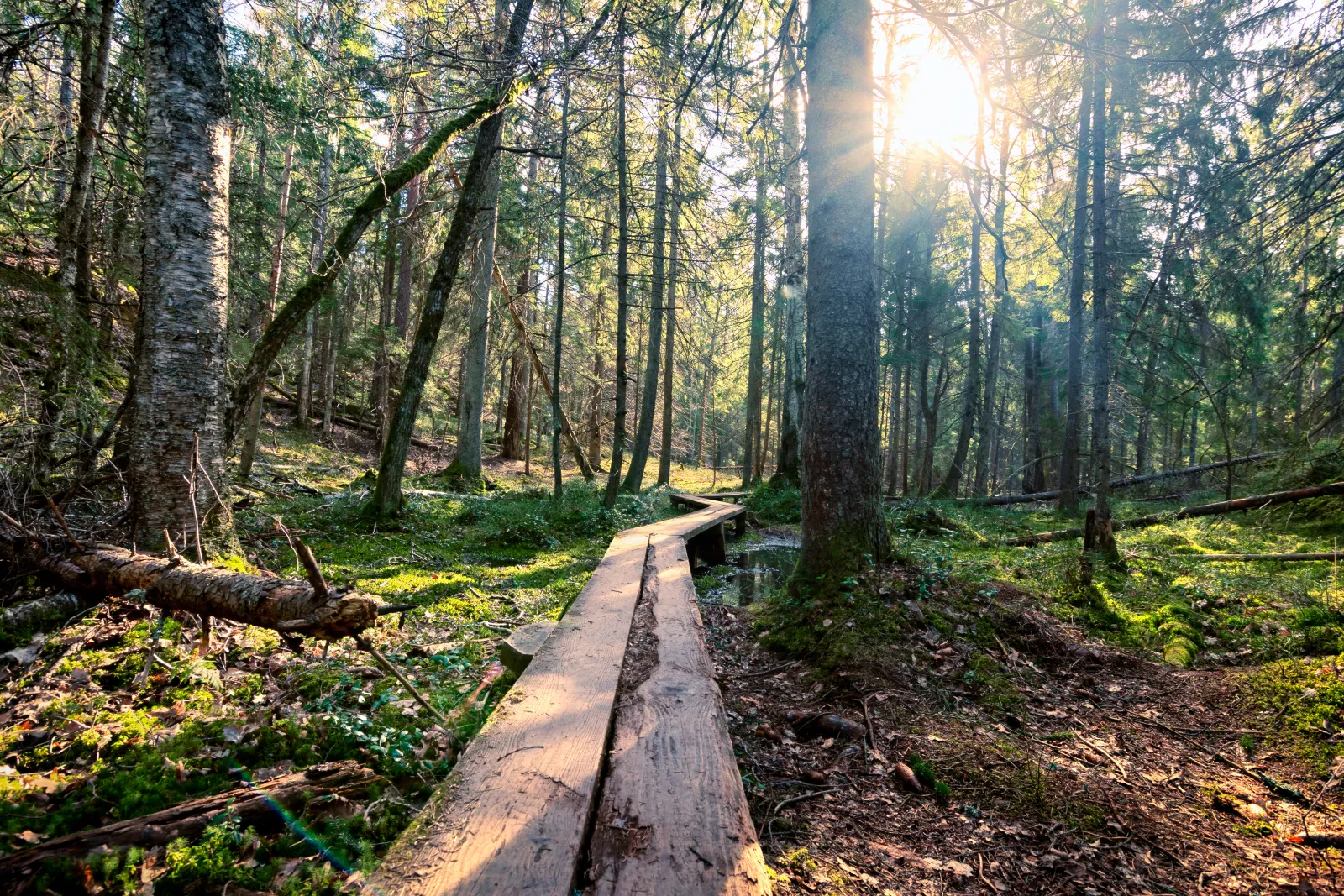
A guide to nature reserves near Stockholm: unspoilt nature close to the city
The County Administrative Board of Stockholm says there are nearly 370 nature reserves in Stockholm County, and the county also has two national parks: Tyresta and Ängsö. This page brings together the reserves you can reach by public transport, what you'll find there and which rules apply.
The difference between the two: according to the Swedish Environmental Protection Agency, a national park is the strongest protection an area can get, and the land is owned by the state – Sweden has 31 national parks. Nature reserves are the most common way to protect nature and can be set up by both county administrative boards and municipalities. Each reserve has its own rules (föreskrifter), and the boundaries are marked with posts showing a snowflake on a blue background.
How the Right of Public Access and local reserve rules work
The Right of Public Access (allemansrätten) also applies in nature reserves and national parks, but the Swedish Environmental Protection Agency is clear that it can be restricted or in some cases extended, and that the rules differ between areas. So there is no single set of reserve rules for Stockholm County.
Find out what applies where you're going
In the agency's own words, you practise the Right of Public Access when you find out what applies in the area you are visiting. Read the regulations on the information board at the entrance.
Common restrictions
Bans on fires or dogs in some areas, cycling and riding only on marked trails, and camping bans or camping only at designated sites.
Dogs
The agency says dogs must always be on a lead in national parks and nature reserves, and that dogs must be on a lead in nature from 1 March to 20 August, when wild animals have young. In some protected areas dogs are banned altogether.
Firewood
You may not take wood from fallen trees without the landowner's permission, or build shelters from them.
Berries and mushrooms
Berry picking is part of the Right of Public Access as long as the berries aren't protected, but in protected areas the condition is often that you only pick what you can eat on the spot.
Public transport
Getting to Stockholm's nature reserves by SL
- Åkeshov · Ängbyplan
- Björkhagen
- Bus 834 to Tyresta
Several reserves can be reached by metro, commuter train or bus – for example Judarskogen from Åkeshov and Ängbyplan, Nackareservatet from Björkhagen and Tyresta on bus 834. With public transport you can also walk a trail from one stop to another.
Cost
What a trip costs
- Free entry
- Parking fee: Tyresta by, Björnö
It costs nothing to enter a nature reserve or a national park. Parking, however, is paid at several of the larger entrances – Sweden's National Parks lists a fee at Tyresta by, and Björnö has paid parking at the reserve entrance. If you come by SL, the only cost is the fare.
The best nature reserves south of Stockholm
Tyresta National Park is reached by bus 834 and has marked trails from 2 to 16 km, and in Nackareservatet it is about 2 km from Björkhagen metro station to Söderbysjön. Paradiset in Huddinge has a rest cabin and a wind shelter.
South of Stockholm are three reserves with trails you can reach by SL.
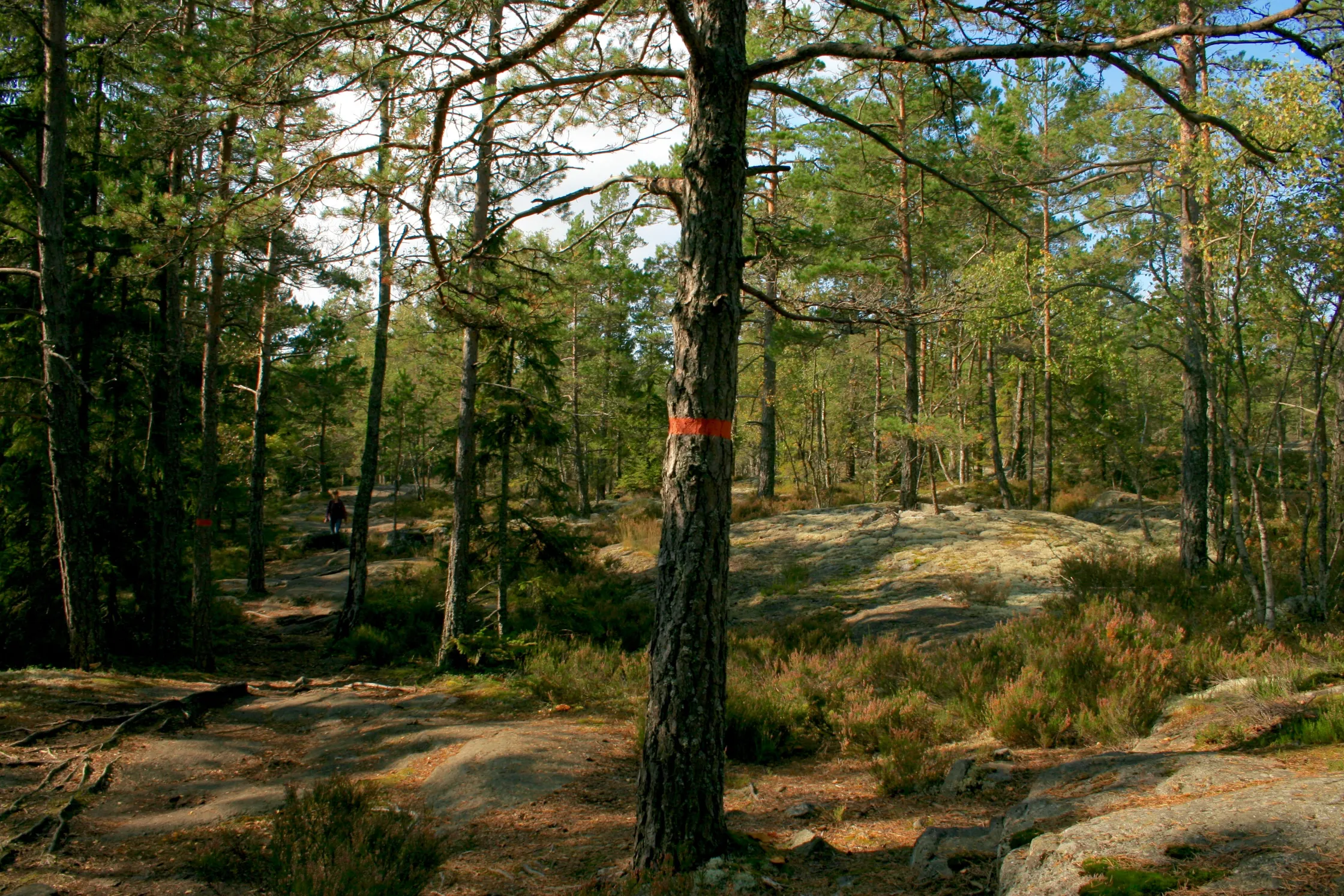
Tyresta: old-growth forest and marked trails
About the park: According to Sweden's National Parks, the largest old-growth forest area south of the river Dalälven, 20 km from central Stockholm, with Tyresta by as the main entrance. There are traces of the 1999 forest fire.
Urskogsstigen
green marking, six dots2 km
Hällmarksstigen
red/white2.5 km
Bylsjöpromenaden
red, one dot5 km
Described as an easy walk; goes around the lake Bylsjön.
Fornborgsrundan
6 km
Styvnäsrundan
6 km
Kustleden
7 km
Storskogsrundan
8 km
Tyrestarundan
13 km
Sjöleden
16 km
- Facilities
- Naturum – Nationalparkernas hus at Tyresta by. Parking at the entrance is paid.
- Getting there
- Bus 834 to the stop Tyresta by, or bus 807/809 to Svartbäcken and about a 3-kilometre walk.
Huddinge
Paradiset nature reserve: rest cabin, wind shelter and Sörmlandsleden
- Rest cabin and wind shelter
- Sörmlandsleden stages 5 · 6
- Bus 709 to Bruket
- About the reserve
- A municipal reserve in Huddinge where several hiking trails start from the old croft of Paradiset. There is a rest cabin and a car park there, and a wind shelter by the lake Trehörningen. The reserve has several Stone Age settlement sites. Rocky pine forest covers most of the area, with some spruce forest, deciduous woodland and mires, and capercaillie are common. The area is part of Natura 2000.
- Sörmlandsleden
- Stage 5 ends at Paradiset and stage 6 starts here, with a wind shelter and water pump at the start and a wind shelter and spring after 7 km.
- Getting there
- SL bus from Huddinge station to the stop Bruket – Sörmlandsleden gives bus 709 to Bruket or Ådran.
Nackareservatet: lakes, Sörmlandsleden and Hellasgården
- The lakes
- Källtorpssjön, Söderbysjön and Dammtorpssjön.
- Sörmlandsleden
- The first stage starts at Björkhagen metro station and heads east – it is about 2 kilometres to Söderbysjön, and the stage is 8.5 km to Skogshyddan.
- Hellasgården
- The outdoor centre on Källtorpssjön has exercise trails, a sauna, gym and café, open 09:00–21:00 in the lighter part of the year and 09:00–18:00 in the darker part. Bus 401 from Slussen to the stop Hellasgården. Nacka Municipality calls the reserve one of the most visited outdoor areas in the country. From metro line 17 you can also get off at Hammarbyhöjden or Bagarmossen and follow the signs to Hellasgården, and there is a paid car park at Hellasgården.
- Hellasgården, lighter part of the year: 09:00–21:00
- Hellasgården, darker part of the year: 09:00–18:00
Scenic nature reserves north of Stockholm
Sjöängsslingan around Angarnssjöängen in Vallentuna is just under seven kilometres long, and Judarskogen – the City of Stockholm's first nature reserve, established in 1995 – is close to the metro.
North and west of the city: a reserve on a peninsula, a wetland and a reserve by the metro.
Vaxholm
Bogesundslandet: forests, swimming spots and wind shelters
- Wind shelters
- Fireplaces
- Hiking trails
- Location
- A peninsula in Vaxholm Municipality, surrounded by the bays Stora Värtan, Askrikefjärden and Vaxholmsfjärden.
- In the reserve
- Forests for mushroom and berry picking, bridle paths, swimming spots, hiking trails, picnic areas, fireplaces and wind shelters. Managed by the National Property Board Sweden.
- Rules
- You may not camp for more than two nights in a row except at designated sites, cycle off-road except on designated bike paths, or ride except on roads and designated bridle paths.
Vallentuna
Angarnssjöängen: wetland and Sjöängsslingan
- Just under 7 km
- Roslagsbanan + bus towards Kårsta
- Sjöängsslingan
- The County Administrative Board gives a trail of just under seven kilometres around the lake, in Vallentuna.
- Accessibility
- Accessible parking spaces with connecting trails are only available at Örsta, and a surfaced path leads to the Byksberget viewpoint, which has a wheelchair ramp. Birds: the County Administrative Board calls the lake one of Stockholm's finest bird lakes. Most birdwatchers head for Midsommarberget, on the right as you walk down towards the meadows from the Örsta entrance, and further east there is a bird tower. Parking: at Örsta the car park is often full at weekends in the snow-free season – visitors are then directed to the car parks at Olhamra, Kusta and Skesta.
- Getting there
- The Roslagsbanan train to Vallentuna and a bus towards Kårsta – get off at Örsta, 200 metres from the reserve.
- Camping
- Only within the designated area and for at most two nights in a row.
Bromma
Judarskogen nature reserve: a forest lake and moraines by the metro
- Åkeshov approx. 200 m
- Ängbyplan approx. 100 m
- About the reserve
- Established in 1995 as the City of Stockholm's first nature reserve, with open meadows, hilly woodland and the lake Judarn. A network of footpaths and trails runs around the lake.
- The moraines
- The De Geer moraines – long, narrow ridges of stones left by the ice sheet – are classed as being of national interest.
- Natura 2000
- Three man-made amphibian ponds by the lake; the area is protected for the sake of the great crested newt.
- Getting there
- The green metro line runs along the northern edge – about 200 metres from Åkeshov and about 100 metres from Ängbyplan. Six entrances with information signs.
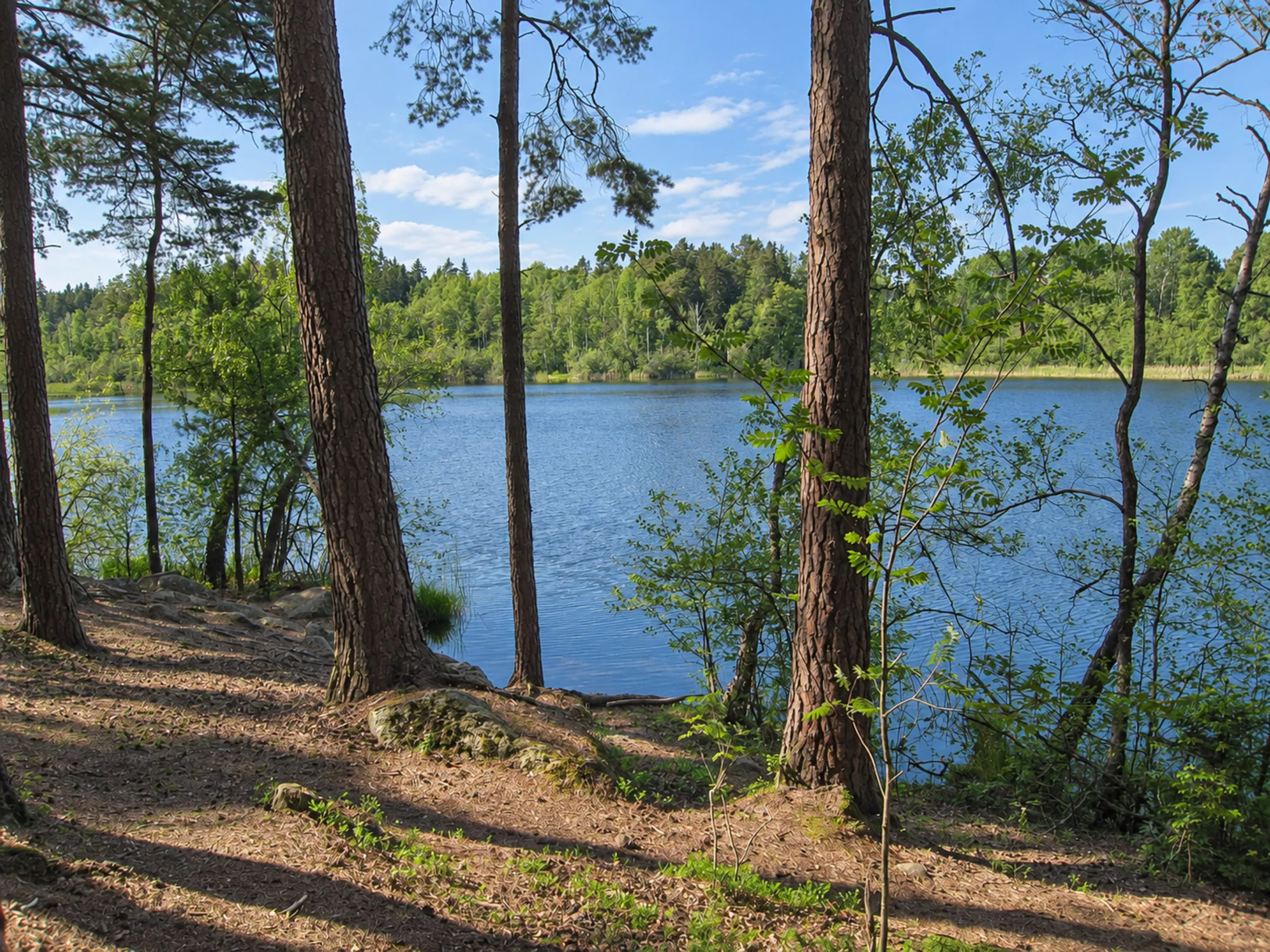
Coastal and archipelago nature reserves near Stockholm
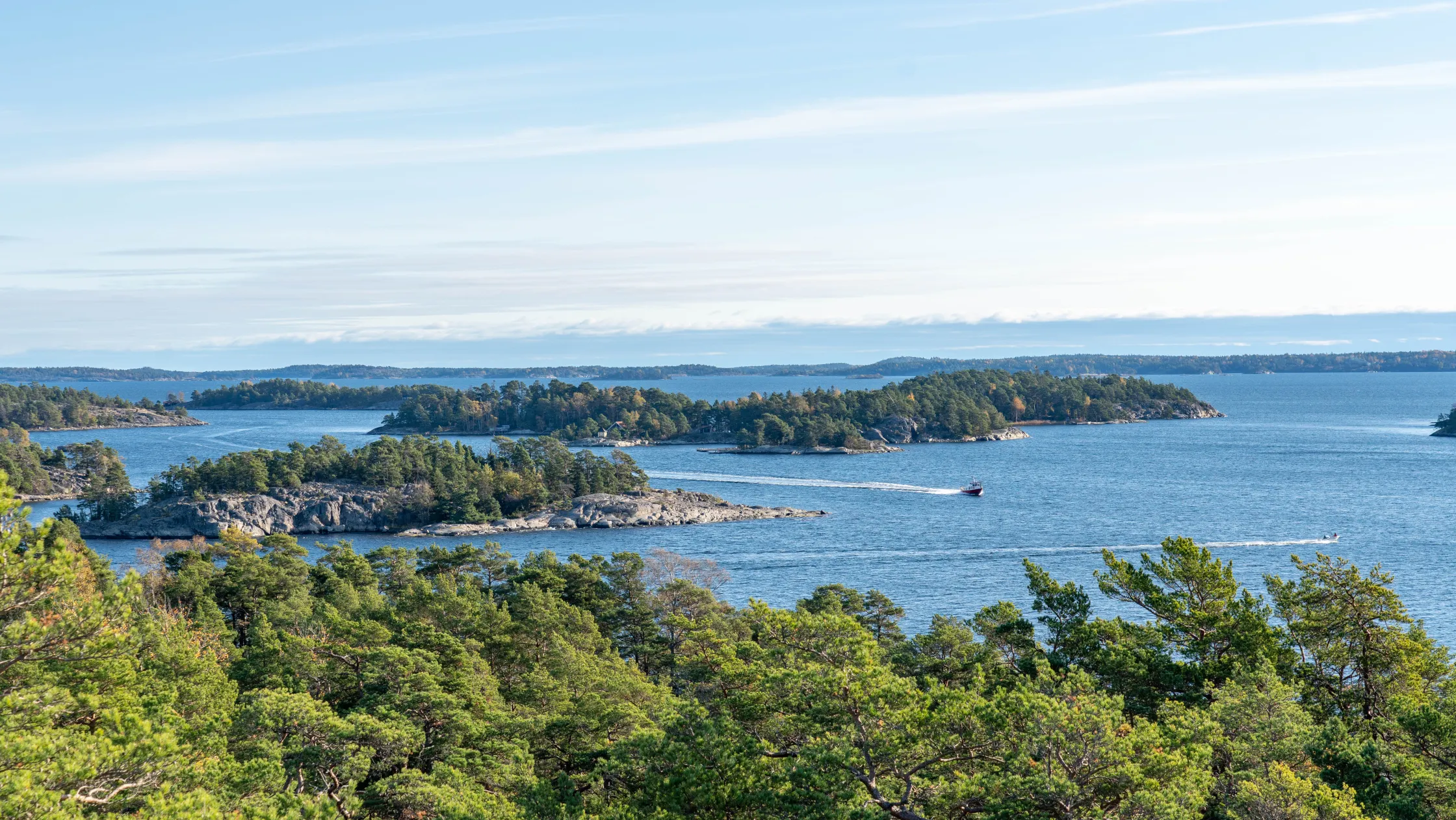
Bus 429 runs from Slussen to Björnö nature reserve at the far end of Ingarö, and to Ängsö National Park, about 15 km south of Norrtälje, Gula båtens Ängsölinje from Furusund takes about 25 minutes (some days in high season, pre-booked).
Two protected areas in the archipelago – one you reach by bus and one you reach by boat.
Björnö nature reserve: sandy beaches, cliff bathing and a snorkel trail
- Sandy beach at Torpesand
- Cliff bathing
- Snorkel trail
- Marked trails
- Viewing tower
- Fireplaces
- Camping spots
- Bus 429 from Slussen
Björnö nature reserve is at the far end of Ingarö in Värmdö Municipality and is managed by the Archipelago Foundation. The foundation calls it one of the most accessible nature reserves in the archipelago.
- Swimming and nature
- The sandy beach at Torpesand, cliff bathing and views over Nämdöfjärden, with typical middle-archipelago nature of conifer forest and open land.
- The snorkel trail
- The Archipelago Foundation highlights the snorkel trail at Torpesand, and there are information signs at the Torpesand car park.
- Trails and facilities
- Several marked trails continue to Småängsuddarna and a viewing tower. There are picnic areas with fireplaces and camping spots.
- Getting there
- Bus 429 from Slussen via Gustavsberg; the Archipelago Foundation gives the stop Björnö naturreservat. Parking at the reserve is paid.
Ängsö National Park: flower-rich meadows and a genuine archipelago setting
About the park: According to Sweden's National Parks, Ängsö National Park is in Stockholm's northern archipelago, in the heart of Roslagen, about 15 km south of Norrtälje. It is one of Sweden's first national parks and was established in the early 20th century.
The farmed landscape: The park is a well-preserved 19th-century agricultural landscape with hay meadows, pastures and small fields, plus a crofter's setting. In area it is one of Sweden's smallest national parks, but its nature is rich in species.
The flowering: In spring and early summer the meadows are in full bloom. Just south of Norrudden the elder-flowered orchid (Adam och Eva) blooms in large numbers, and the hay meadow Långängen stretches north–south across the island.
Bird protection: The sea inlets are popular nesting sites, and part of the island is a bird sanctuary.
By boat: In spring and summer, excursion boats run to Ängsö from Strömkajen in central Stockholm and from Furusund, arriving at Hemudden. Gula båtens Ängsölinje (the Yellow Boat's Ängsö line) runs Furusund–Ängsö on some days of the week in high season, takes about 25 minutes and must be booked in advance. Note: Search for "Nationalpark Ängsö" in SL's journey planner – there are several islands with the same name.
Guided tours: Mainly in spring and early summer, when Waxholmsbolaget's boats run to the spring timetable. You can explore the island on your own all year.
Child-friendly nature reserves near Stockholm
In Tyresta, Allemansråttans stig (650 metres) and Tjäderstigen (1.3 km) have tasks for children, and Judarskogen, close to the metro, has Upptäckarstigen and a nature trail with eight information boards.
How easy a trip is with children depends on the distance from the stop, the facilities and whether there is something to discover along the way. The managers rarely state whether paths suit pushchairs – check on site.
Easy walks and children's trails
Judarskogen – Upptäckarstigen
- Close to the metro
- Eight information boards
- About an hour
An adventure trail for children where you meet the wood mouse, the fox, the owl, the hare, the frog and the newt. There is also a nature trail with eight information boards, about an hour. Close to the metro.
Tyresta – Allemansråttans stig and Tjäderstigen
- 650 m · 1.3 km
- Tasks for children
650 metres and 1.3 km, with tasks for children. Bylsjöpromenaden, 5 km, is described as an easy walk.
Björnö – Torpesand
- Sandy beach
- Snorkel trail
A sandy beach and a snorkel trail, according to the Archipelago Foundation a popular spot for families with children.
Facilities and accessibility for families
- Naturum – Tyresta by
- Café – Tyresta by, Hellasgården
- Flush toilets – Tyresta by
- Björnö: no restaurant or café
Facilities differ between the reserves – check with the manager before you go. Tyresta by has a naturum, a café and flush toilets, and there is a café at Hellasgården. Björnö has no restaurant or café.
Rules in Stockholm's nature reserves: fires, tents and dogs
The rules differ between reserves – Angarnssjöängen allows camping for at most two nights in a row within a designated area, and Bogesundslandet at most two nights except at designated sites. According to the Swedish Environmental Protection Agency, dogs must always be on a lead in nature reserves and national parks.
In a nature reserve, the reserve's own regulations apply alongside the Right of Public Access. The Swedish Environmental Protection Agency is clear that the rules differ between areas – so below is what the agency actually says, plus a few concrete examples from reserves around Stockholm.
Fires
Can you light a fire in a nature reserve?
- Bring your own fuel
- Check for fire bans
The rules for fires differ between areas – the Swedish Environmental Protection Agency says fires are banned in some protected areas. Always check the regulations for the particular reserve you're visiting.
- Bring your own fuel
- You may not take wood from fallen trees without the landowner's permission, or build shelters from them.
- Living trees
- Branches, bark and twigs on living trees must be left alone.
- Fire bans
- In dry weather the County Administrative Board or the fire service can issue a fire ban. Check the current fire risk before you light a fire or a camping stove with an open flame.
Dogs
Dogs in nature reserves: always on a lead
- Always on a lead
- 1 March–20 August
The Swedish Environmental Protection Agency says dogs must always be on a lead in national parks and nature reserves, and that in all of Sweden's national parks it is forbidden to have your dog off the lead, however obedient it is.
- 1 March–20 August
- When wild animals have young, you must keep a particularly close eye on your dog, and it may not run loose. In practice that almost always means a lead.
- Grazing animals
- Always keep your dog on a lead near grazing animals.
- Sometimes banned altogether: In some protected areas it may be forbidden to bring a dog at all, or only allowed at certain times of year. Check before you go.
Berries, mushrooms and plants
Picking berries, mushrooms and plants
- Berries and mushrooms
- Protected: don't touch
Berry picking is part of the Right of Public Access as long as the berries aren't protected by law – and the same goes for mushrooms. But in protected areas the condition is often that you only pick what you can eat on the spot, so check the regulations.
- Roots and plants
- You may not dig up or take plants' roots, bulbs or seedlings without the landowner's permission. Only the parts that grow back every year, such as berries, may be picked.
- Protected species
- Protected plants may not be picked or damaged. If a plant is protected, the whole plant is – for mistletoe, even berries that have fallen to the ground may not be picked.
Camping and overnight stays
Angarnssjöängen
At most two nights in a row, within the designated area
Bogesundslandet
At most two nights in a row except at a designated site
The Swedish Environmental Protection Agency says that in some nature reserves and national parks you may not camp at all, and in others only at designated sites. There is no common rule for the county.
- Examples of actual rules
- Angarnssjöängen only allows camping within the designated area and for at most two nights in a row. Bogesundslandet has the same limit: no more than two nights in a row except at a designated site.
- Wind shelters
- Along Sörmlandsleden the association lists wind shelters stage by stage, including at Årsjön on stage 3 and at Paradiset on stages 5 and 6.
- Check the regulations
- Read the information board at the entrance before you pitch your tent.
Packing list and digital tools for nature reserves near Stockholm
Planning a good day trip takes the right things in your rucksack and smart digital tools on your phone. With the right gear and reliable information, the visit will be smooth, safe and comfortable for everyone.
Gear for the day trip: packing your rucksack
- Shell jacket
- Fleece or wool
- Boots or walking shoes
- Water
- Packed lunch
- Head torch
The weather in Stockholm's forests and coastal areas changes quickly. Layers work best, and packing can be kept simple: a shell jacket that stands up to wind and rain, an extra layer in fleece or wool, hiking boots or broken-in walking shoes, water and a packed lunch, and a head torch during the dark part of the year.
Maps, apps and real-time journey planning
Two things are worth sorting before you go:
Download the map for offline use
Mobile coverage varies deep in the forest and in the archipelago reserves, so download the map area in advance in whatever app you use.
Look up the trip in SL's journey planner
Routes and stops change. For Ängsö you also need to search for "Nationalpark Ängsö" – Sweden's National Parks points out that there are several islands with the same name.
Frequently asked questions
4 questions
01Is it completely free to visit nature reserves near Stockholm?
It costs nothing to enter a nature reserve or a national park. Parking, however, is paid at several of the larger entrances – Sweden's National Parks lists a fee at Tyresta by, and Björnö has paid parking at the reserve entrance. If you come by SL, the only cost is the fare.
02Can you camp anywhere in a nature reserve?
No, and there is no common rule for the county. The Swedish Environmental Protection Agency says that in some nature reserves and national parks you may not camp at all, and in others only at designated sites.
Two concrete examples: Angarnssjöängen only allows camping within the designated area and for at most two nights in a row, and Bogesundslandet has the same limit – no more than two nights in a row except at a designated site. Read the regulations on the information board at the entrance before you pitch your tent.
03Does your dog always have to be on a lead in a nature reserve?
Yes. The Swedish Environmental Protection Agency says dogs must always be on a lead in national parks and nature reserves, and that in all of Sweden's national parks it is forbidden to have your dog off the lead, however obedient it is. Between 1 March and 20 August, when wild animals have young, dogs may not run loose in nature at all.
Bear in mind too that in some protected areas it may be forbidden to bring a dog altogether, or only allowed at certain times of year. Check what applies before you go.
04Which nature reserve is easiest to reach by metro from central Stockholm?
Judarskogen in Bromma – according to the City of Stockholm about 200 metres from Åkeshov and about 100 metres from Ängbyplan on the green line. Nackareservatet can also be reached from the green line: the first stage of Sörmlandsleden starts at Björkhagen metro station.
Sources
Details checked against these sources in September 2026.
The facts on this page are based on these sources. Under each one you can see which details we took from it. Opening times, prices and departures change – always check with the source before you go.
- County Administrative Board of Stockholm: Nature reserves · in Swedishnearly 370 nature reserves in Stockholm County
- Swedish Environmental Protection Agency: The Right of Public Access in protected areas · in Swedishit can be restricted or extended; different areas have different rules; in some reserves fire bans, camping bans or camping only at designated sites apply
- Swedish Environmental Protection Agency: Dogs in nature · in Swedishalways on a lead in national parks and nature reserves; lead required 1 March–20 August; dogs may be banned altogether in some protected areas
- Swedish Environmental Protection Agency: Questions and answers on the Right of Public Access · in Swedishwood from fallen trees requires the landowner's permission; roots, bulbs and seedlings may not be taken; protected plants fully protected, even fallen mistletoe berries
- Sweden's National Parks: Tyresta National Park – activities · in SwedishUrskogsstigen 2 km, Hällmarksstigen 2.5 km, Bylsjöpromenaden 5 km, Fornborgsrundan 6 km, Styvnäsrundan 6 km, Kustleden 7 km, Storskogsrundan 8 km, Tyrestarundan 13 km, Sjöleden 16 km, with marking colours
- Sweden's National Parks: Tyresta – Getting here20 km from the city; bus 834 all the way to Tyresta by, bus 807/809 to Svartbäcken plus approx. 3 km; paid parking
- Sweden's National Parks: Ängsö National Park · in Swedishin Stockholm's northern archipelago in Roslagen; one of Sweden's first national parks, established in the early 20th century; one of Sweden's smallest by area; the Adam och Eva orchid south of Norrudden; the hay meadow Långängen; bird sanctuary
- Sweden's National Parks: Ängsö – Getting hereexcursion boats from Strömkajen and Furusund to Hemudden; Gula båtens Ängsölinje Furusund–Ängsö approx. 25 minutes, booking required; choose "Nationalpark Ängsö" in the journey planner
- County Administrative Board of Stockholm: Paradiset nature reserve · in Swedishmunicipal reserve; rocky pine forest, spruce, deciduous woodland and mires; capercaillie; Natura 2000; rest cabin and car park at the croft; several trails from the Paradiset croft; rest cabin; wind shelter at Trehörningen; Stone Age settlement sites; SL bus from Huddinge station to the stop Bruket
- County Administrative Board of Stockholm: Angarnssjöängen nature reserve · in Swedishone of Stockholm's finest bird lakes; Midsommarberget and a bird tower; Byksberget viewpoint with wheelchair ramp; when the Örsta car park is full, Olhamra, Kusta and Skesta; Sjöängsslingan just under seven kilometres; accessible parking with connecting trails only at Örsta; Roslagsbanan to Vallentuna and bus towards Kårsta, get off at Örsta 200 metres from the reserve; camping only within the designated area and for at most two nights in a row
- County Administrative Board of Stockholm: Bogesundslandet nature reserve · in Swedishpeninsula in Vaxholm Municipality; hiking trails, picnic areas, fireplaces and wind shelters; managed by the National Property Board Sweden; camping at most two nights in a row except at designated sites
- The Archipelago Foundation: Björnö · in Swedishsnorkel trail at Torpesand; marked trails to Småängsuddarna and a viewing tower; picnic areas with fireplaces and camping spots; bus from Slussen to the stop Björnö naturreservat
- Sörmlandsleden: stage 1 Björkhagen–Skogshyddan 8.5 km · in SwedishSöderbysjön after about 2 km
- Sörmlandsleden: stage 6 from Paradiset, 12 km · in Swedishwind shelter and pump at the start, wind shelter and spring after 7 km; SL bus 709 from Huddinge station to Bruket or Ådran
- Hellasgården: opening hours for reception, sauna, gym and café · in Swedish09:00–21:00 or 09:00–18:00 depending on the season
- City of Stockholm: Judarskogen nature reserve · in Swedishestablished 1995, the city's first nature reserve; Natura 2000 for the great crested newt; three amphibian ponds; the De Geer moraines of national interest; Upptäckarstigen for children; nature trail with eight boards approx. one hour; six entrances; about 200 metres from Åkeshov and about 100 metres from Ängbyplan
- Sweden's National Parks: Tyresta – Services in the park · in Swedishflush toilets in Tyresta by
- Swedish Environmental Protection Agency: National parks · in Swedishthe strongest protection an area can get; the land is owned by the state; 31 national parks in Sweden
- Swedish Environmental Protection Agency: Nature reserves · in Swedishthe most common form of protection; set up by county administrative boards and municipalities; own regulations; boundary posts with a snowflake on a blue background
- Nacka Municipality: Nackareservatet · in Swedishone of the most visited outdoor areas in the country; metro line 17 to Hammarbyhöjden, Björkhagen or Bagarmossen; buses from Slussen; paid parking at Hellasgården